
The Process
How a filmstrip actually gets scanned, what gets lost along the way, and what the project has been recognized for so far.
The Work
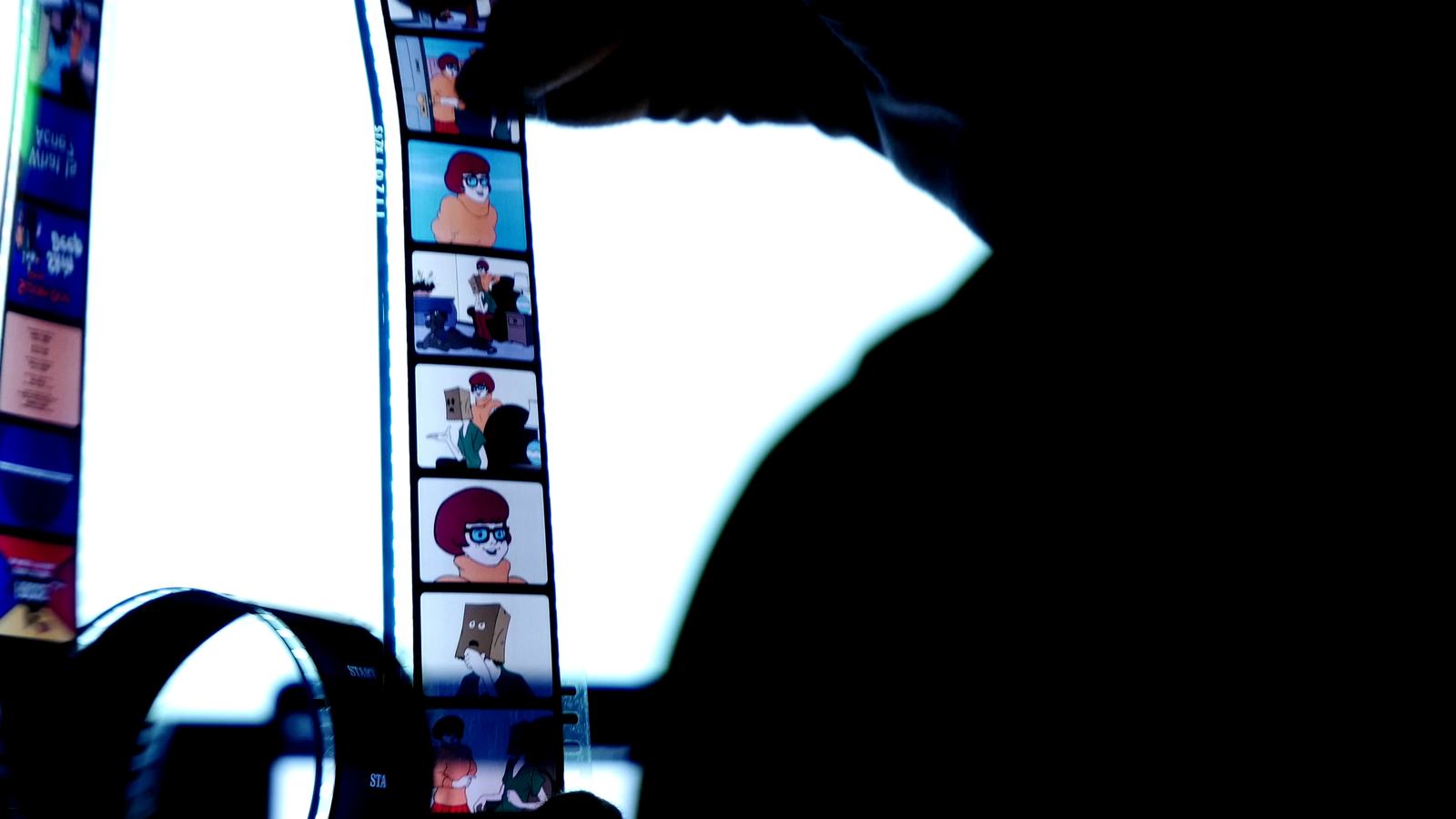
I scan every filmstrip frame by frame on a flatbed scanner at 6,800 DPI. The filmstrips have to be cut into strips to fit the scanner bed.
This outrages institutional archivists – you know, the ones who had 40 years to save them and chose not to. But their neglect means this isn't preservation in the traditional sense, it's triage.
Filmstrips that still have their soundtrack record or cassette can be fully restored into a video simulating what they would have looked like when viewed in their original context. This is a significant undertaking including scan deskewing, scan cropping, color correction, audio digitization and sync, and metadata research. A typical 60-frame filmstrip takes many hours, start to finish.
As a side project of personal interest, I also preserve VHS tapes: consumer recordings, local broadcasts, industrial material that isn't available elsewhere in better formats. Every week I host a live show on Twitch going through donated tapes to see if there's anything worth saving.
Recognition
Internet Archive, 2024
Invited to write the filmstrip chapter of the Vanishing Culture Report.Filmstrip Festival, 2025
Organized the first-ever gathering of collectors and historians working on the format.Last year I raised $6,000 of a $30,000 goal and drove for DoorDash to close some of the gap. That work is gone. I'm not eligible for grants or foundation money. A 9-to-5 would leave no time for this. Your donations are literally what allow the work to continue.