
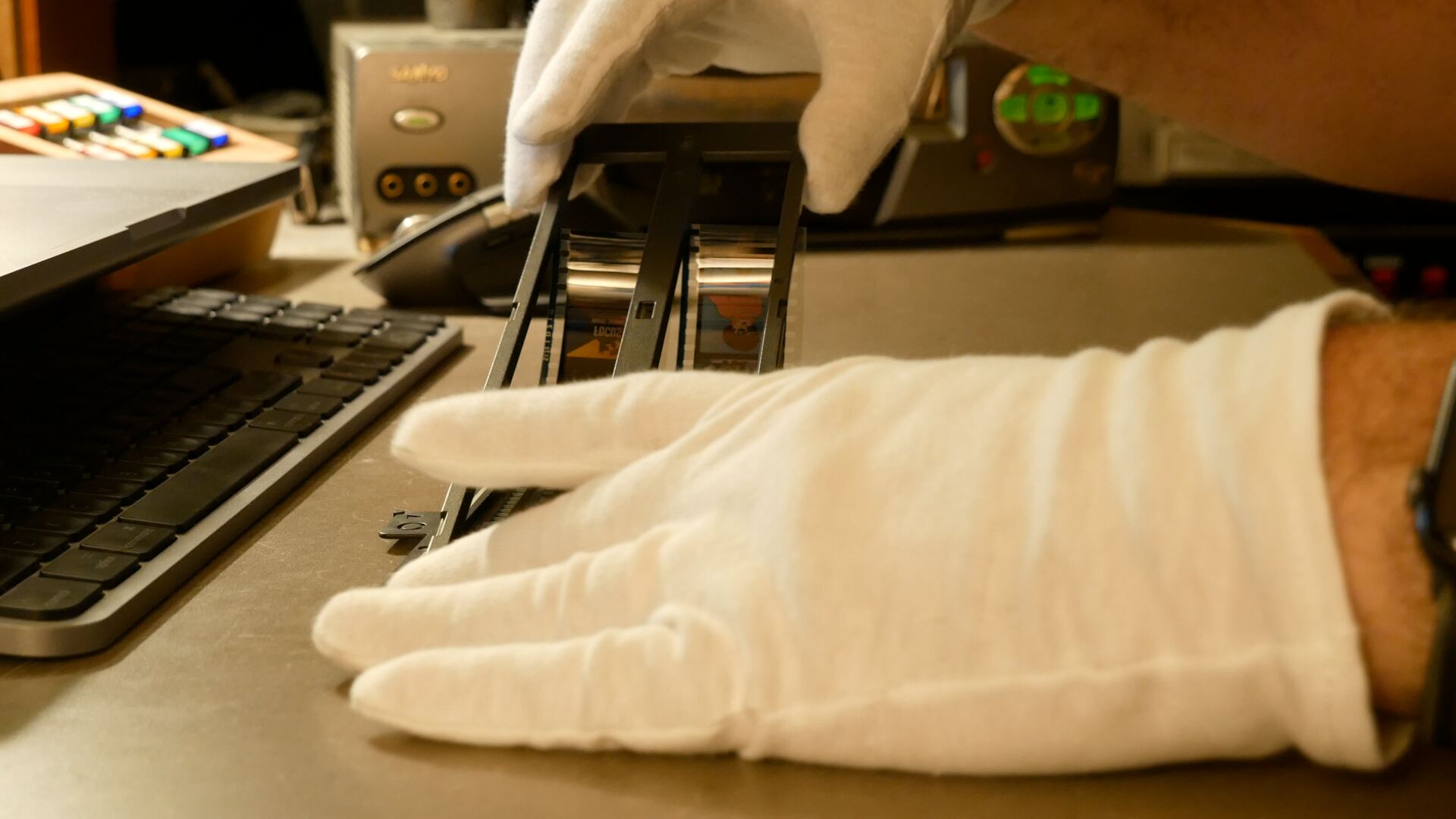
I've spent almost a decade scanning, restoring, and preserving the educational and industrial filmstrips America has forgotten, frame by frame on a flatbed scanner, before it's too late.
The Short Version
I'm Mark, and I run Uncommon Ephemera. I'm the only person on earth actively preserving American educational filmstrips at scale. I've been doing it for seven years.
Over 1,300 filmstrips are now digitized and freely available on the Internet Archive. About 3,000 more are waiting. The film stock, mostly Eastmancolor, is deteriorating whether or not anyone gets to it. This isn't a someday problem.
"There's no collector community, no institutional mandate, no commercial revival market, and no grant money: just me, because someone, somewhere decided this part of our history wasn't worth saving."
1,300+
Filmstrips digitized and free on the Internet Archive
~3,000
Filmstrips still waiting, decaying in the meantime
4,000
Filmstrips cataloged in a purpose-built database
6,800
DPI per frame, scanned by hand on a flatbed
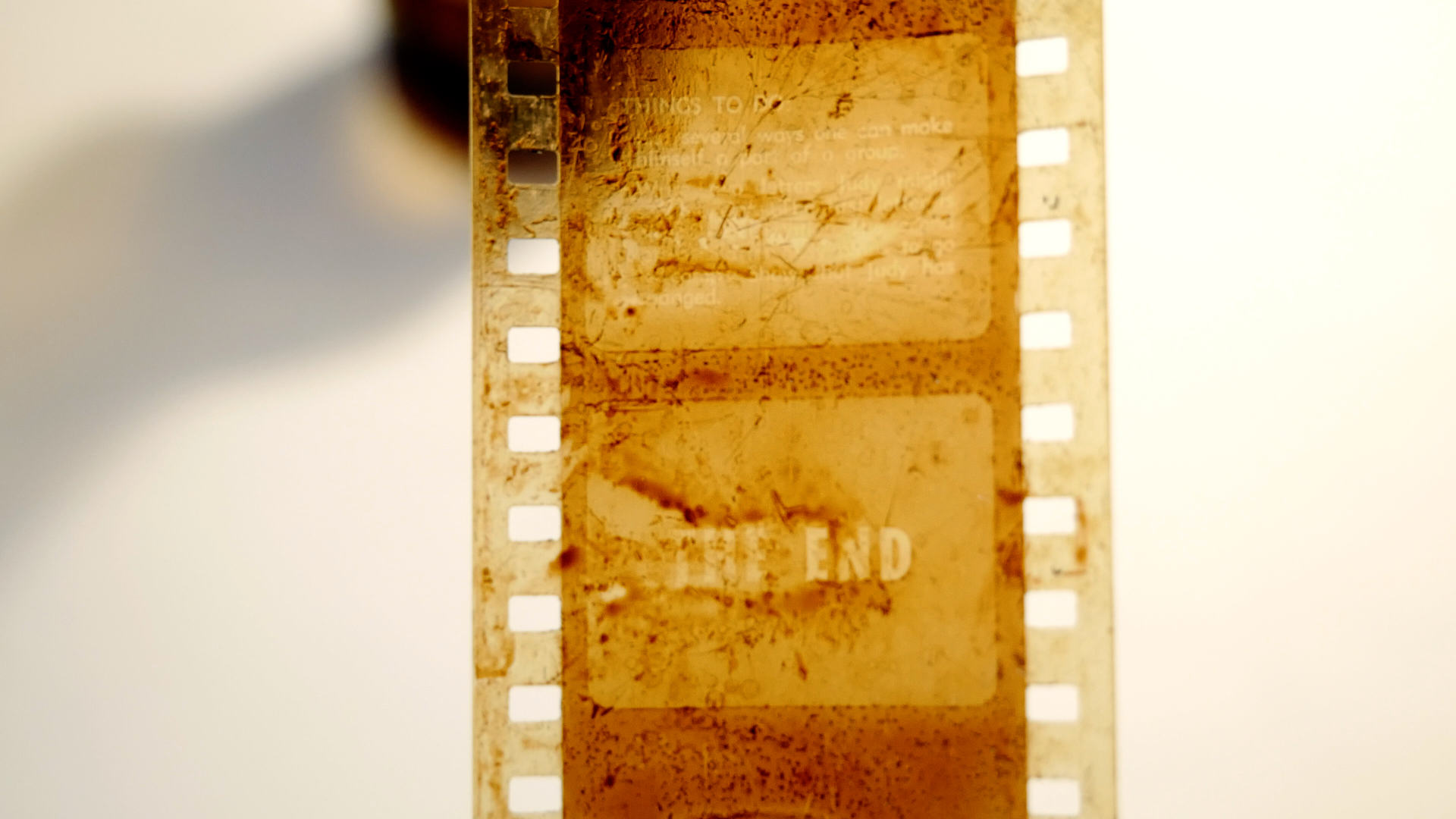
Eastmancolor, Decaying
What's Actually On Them
Some are historically significant. Some are dry and boring. Many are just weird. The caricature of "campy educational film" has made preservation harder, because people don't take the format seriously.
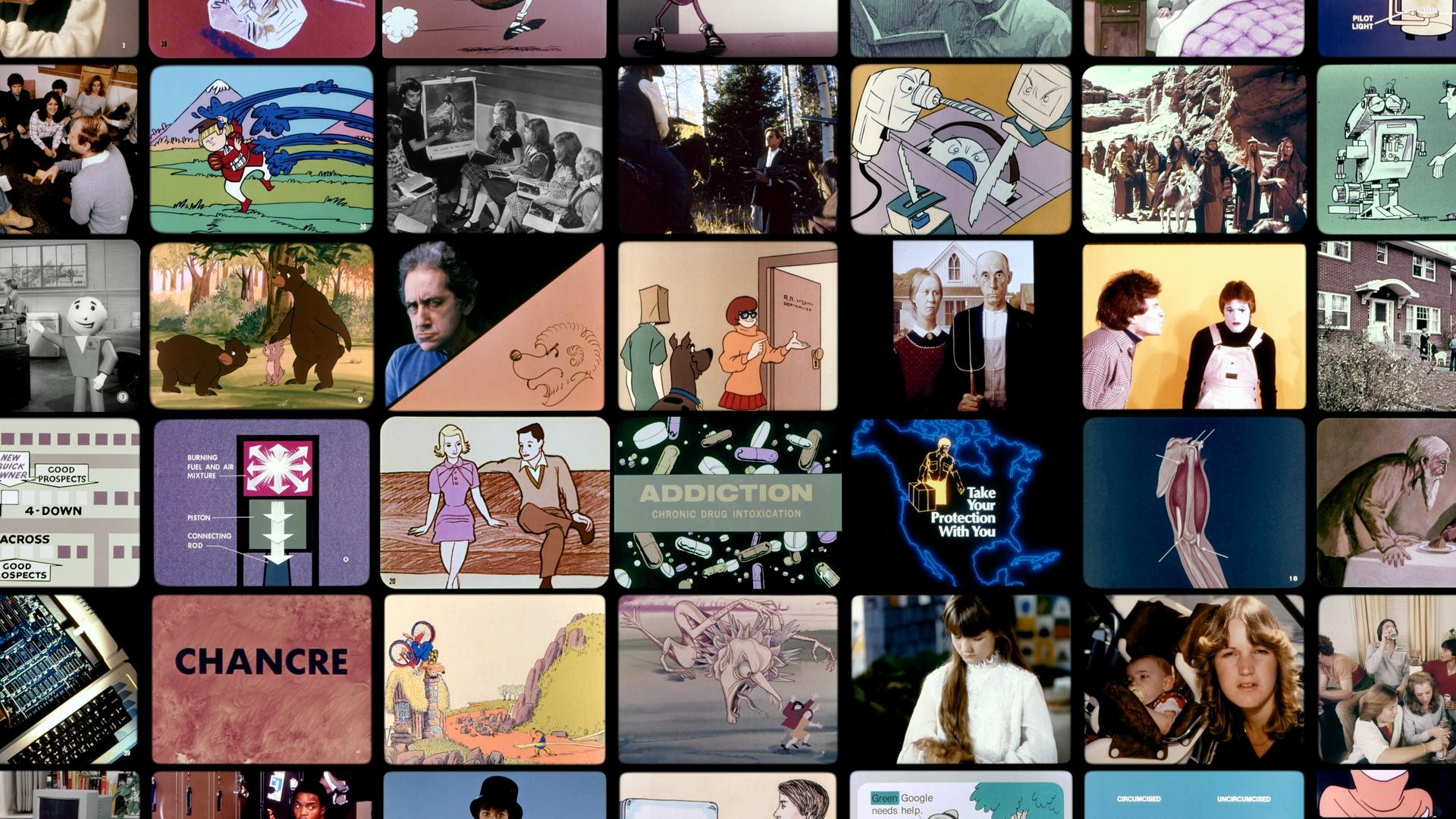
A sentient cube learns about the metric system, despite the surly interjections of a computer. Watch it →
A skeleton steps out of a skin suit to explain bones and muscles. Watch it →
Gonorrhea is depicted as a five-headed monster with insane, original hand-drawn art Watch it →
Documentation of communities and ways of life that no longer exist Watch it →
Morals are taught with a superhero drawn by a real Marvel Comics artist Watch it →
A major industrial manufacturer helps its salesmen sell motors to their customers Watch it →
The Work
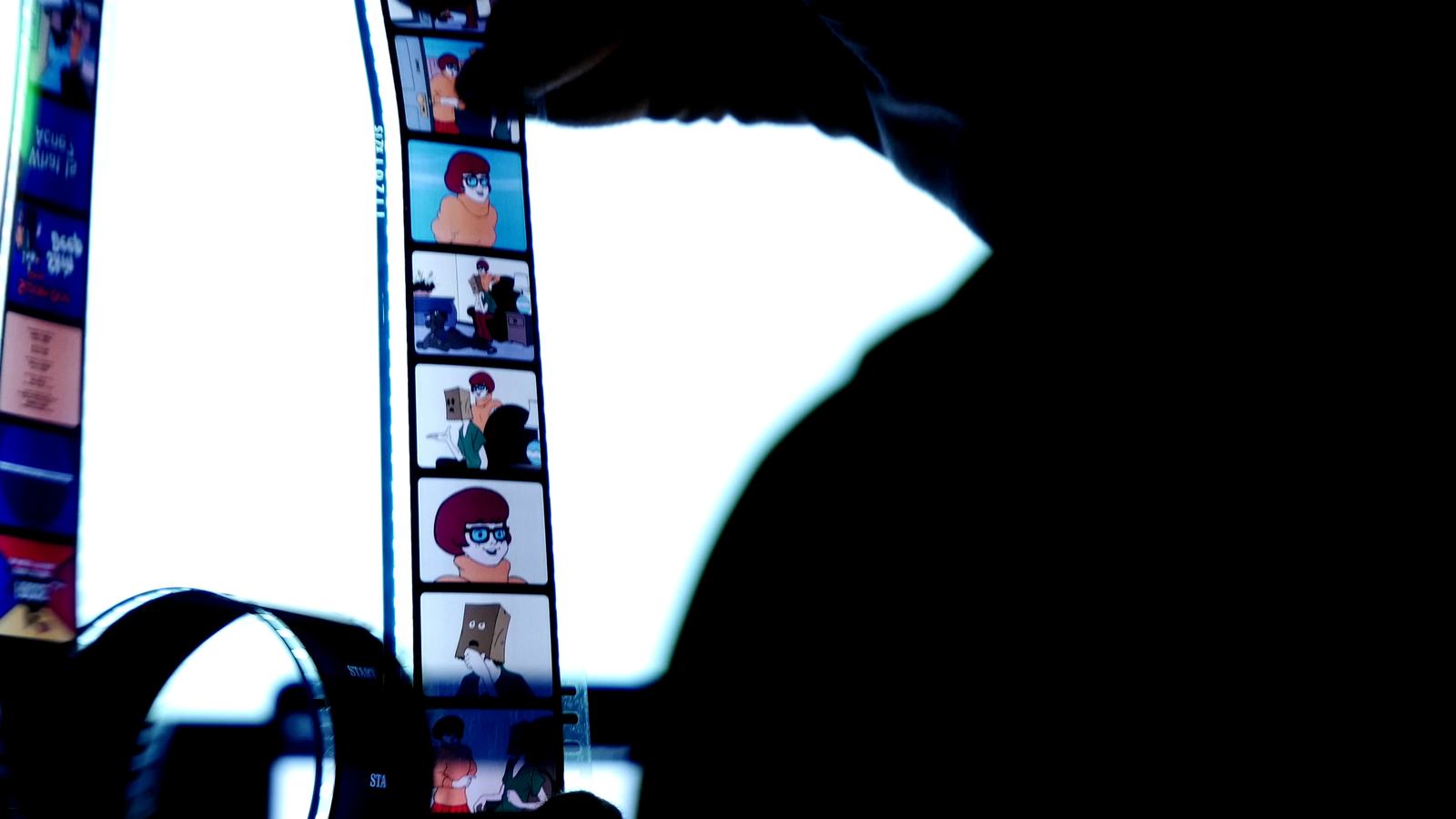
I scan every frame by hand on a flatbed scanner at 6,800 DPI. The filmstrips have to be cut into strips to fit the film carrier. This outrages institutional archivists – you know, the ones who had 40 years to save them and chose not to. But their neglect means this isn't preservation in the traditional sense, it's triage.
Filmstrips that still have their soundtrack record or cassette can be fully restored into a video simulating what they would have looked like when viewed in their original context. This is a significant undertaking including scan deskewing, scan cropping, color correction, audio digitization and sync, and metadata research. A typical 60-frame filmstrip takes many hours, start to finish.
Recognition
Internet Archive, 2024
Invited to write the filmstrip chapter of the Vanishing Culture Report.Filmstrip Festival, 2025
Hosted the first-ever celebration of the format, exhibiting restored filmstrips from the collectionLast year I raised $6,000 of a $30,000 goal and drove for DoorDash to close some of the gap. That work is gone. I'm not eligible for grants or foundation money. A 9-to-5 would leave no time for this. Your donations are literally what allow the work to continue.