
The Format
What a filmstrip actually was, who used it beyond the classroom, and why losing one means losing the only copy of what's on it.
Filmstrips were literally that: short strips 35mm photographic film with individual images, usually 40 to 80 per strip, designed to be projected one at a time. While most started out with captions on every frame, most publishers began including synchronized audio soundtracks on records or cassettes by the 1960s. From the 1920s through the early 1990s, they were how American classrooms taught almost everything: science, history, social studies, safety, health.
They weren't just for kids, either. General Electric used them in the 1950s to help industrial customers select the right electric motors. Chrysler sent monthly filmstrips to their dealer service departments with late-breaking problems and fixes for their cars, complete with a recurring mascot named Tech. Insurance agents used them as well, including one that showed off a briefcase with a filmstrip projector built in, a filmstrip about a filmstrip. In at least one historically-notable case, the Unitarian Universalist Association commissioned a sex education series meant to be shown to 12-to-14-year-old children featuring graphic, explicit photos of genitals and sexual intercourse, in a controversial move that made it all the way to the Supreme Court of the United States.
Millions were produced. Most were simply thrown away when new technology emerged. Almost none have been preserved. The format died when VHS took over in the late 80s and 90s. Equipment became obsolete, collections were thrown out, the companies that made them – Encyclopaedia Britannica Films, the Society for Visual Education, and hundreds more – went out of business or were absorbed into larger corporations that didn't care about archives (and, in the case of Scholastic, Inc., became outwardly hostile to those saving them).
With records or VHS, almost all of the content was eventually reissued on something better: a film negative scanned in 16K, a master recording remastered for CD and streaming. Filmstrips never got that. Most of them were only ever published on filmstrip, and the overnight collapse of the industry in the early 1990s meant that publishers went out of business fast without anyone saving their master negatives. In almost all cases, schools' and businesses' copies of filmstrips are the last remaining copies of these unique films.
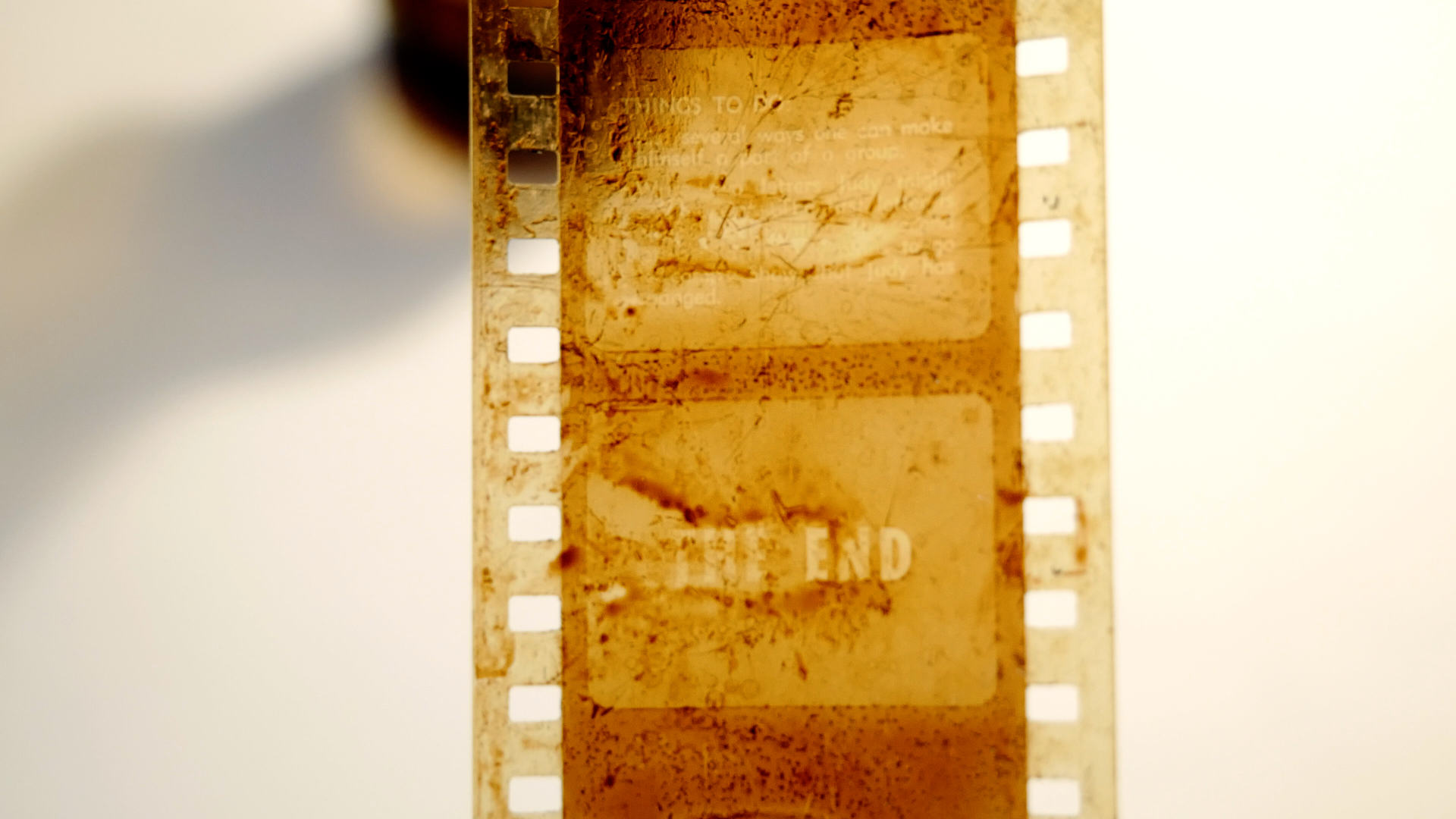
Eastmancolor, Decaying
Next: Process
What's Actually On Them
Some are historically significant. Some are dry and boring. Many are just weird. The caricature of "campy educational film" has made preservation harder, because people don't take the format seriously.
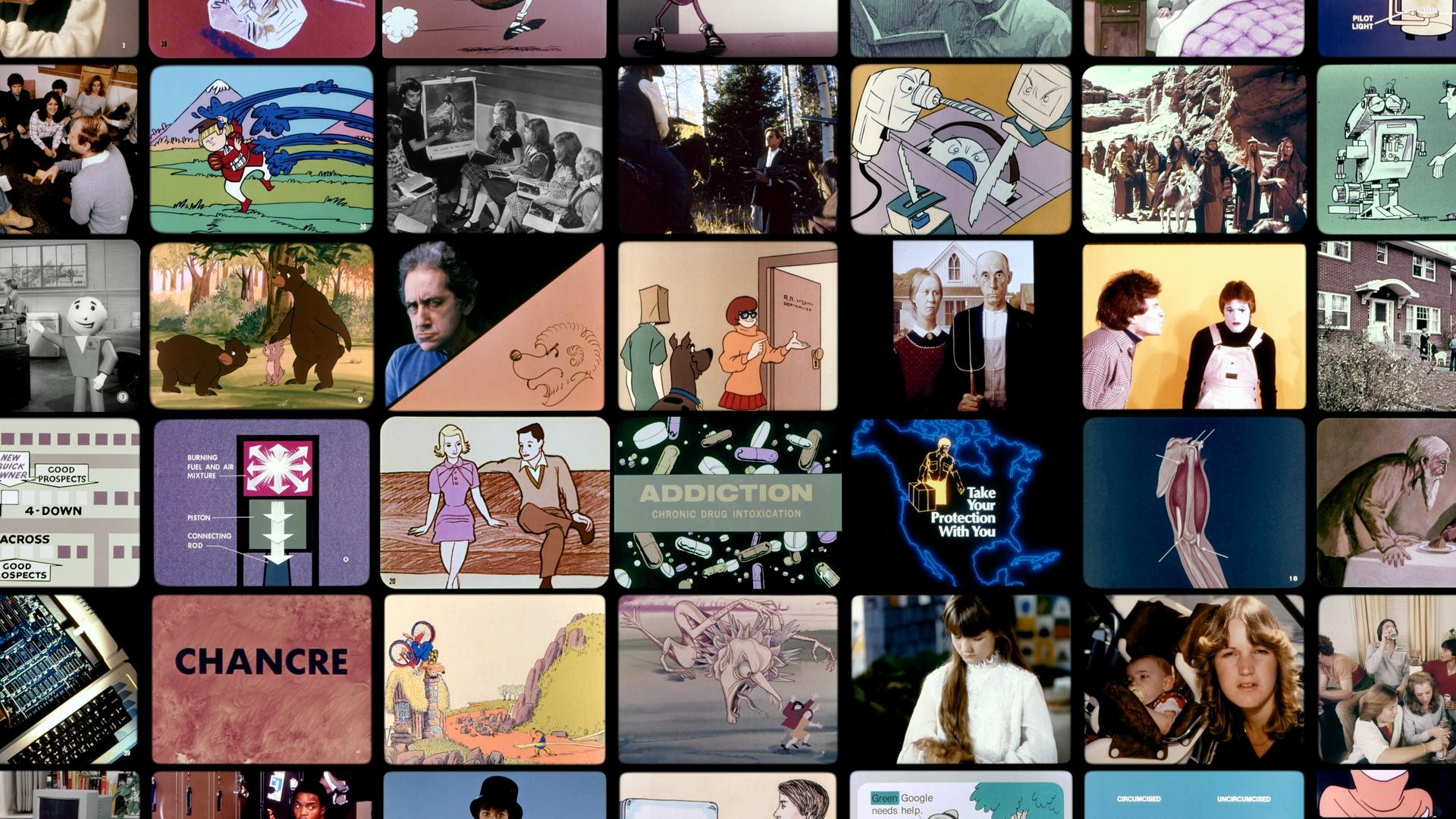
A sentient cube learns about the metric system, despite the surly interjections of a computer. Watch it →
A skeleton steps out of a skin suit to explain bones and muscles. Watch it →
Gonorrhea is depicted as a five-headed monster with insane, original hand-drawn art Watch it →
Documentation of communities and ways of life that no longer exist Watch it →
Morals are taught with a superhero drawn by a real Marvel Comics artist Watch it →
A major industrial manufacturer helps its salesmen sell motors to their customers Watch it →
Last year I raised $6,000 of a $30,000 goal and drove for DoorDash to close some of the gap. That work is gone. I'm not eligible for grants or foundation money. A 9-to-5 would leave no time for this. Your donations are literally what allow the work to continue.